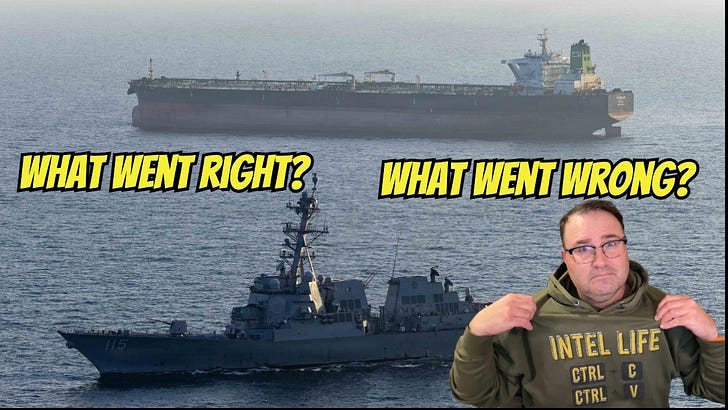
Operation Epic Fury showed what the United States still does better than anyone. It also exposed the problems we keep pretending are tomorrow’s problem.
As I write this on Monday, June 15, 2026. A Memorandum of Understanding — notably not an explicit peace treaty — is likely to be signed on Friday, June 19.
So now is the right time to ask the uncomfortable questions.
What did we learn from the war in Iran? What went right? What went wrong? And, most importantly, what do we need to fix before the next one?
This is an AAR: an After Action Review. It is a structured debrief used by the military and other professional organizations to look at a mission, operation, or event after it happens. The point is not to dunk on people. The point is to learn.
Free members can watch on YouTube below. Please consider becoming a paid member for only $5.
That means we need thick skin.
Some things went very right. The administration deserves credit for some decisions. The military deserves credit for a lot of execution. But there were also failures — some tactical, some strategic, some political, and some cultural — that we have to talk about honestly.
Because the worst thing America can do after a military success is confuse “we won” with “we have nothing to fix.”
We “won” the fight.
Now we need to learn the lessons.
What Went Right
The first thing that went right is simple: we had the guts to do it.
For decades, Iran was treated as a problem for the next administration. Carter, Reagan, Bush, Clinton, Bush, Obama, Trump, Biden. President after president kicked the can down the road.
But Iran really was a threat to the United States. Full stop.
A regime with apocalyptic religious ideology, a growing ballistic missile program, and ambitions for nuclear weapons is not a theoretical problem. It is a strategic problem. And if that regime had developed a nuclear weapon and a reliable way to deliver it, the world would be much more dangerous than it is today.
One thing I have often said is that if the United States had used force against North Korea 20 or 25 years ago, Pyongyang might never have developed nuclear weapons and the delivery systems to threaten its neighbors. Instead, because we failed to deter North Korea early, we ended up spending billions on missile defense systems in California and Alaska. And now North Korea can hold parts of the region at risk.
The same logic applied to Iran.
People like to joke that Iran has been “two weeks away from a bomb” for 20 years. I understand the cynicism. But the real danger was not just the bomb. It was the delivery system.
A nuclear weapon without a delivery mechanism is still dangerous, of course. You could float it into a harbor in a shipping container. But the real strategic nightmare is a nuclear warhead mounted on a ballistic missile. And Iran’s ballistic missile technology was improving.
So yes, choosing to go to war was a risk. But allowing Iran to keep climbing the ladder toward a nuclear-capable ballistic missile force was also a risk.
The world is safer now than it was before February 28.
The Tactical Results Were Impressive
From a tactical standpoint, the operation was a success by almost any reasonable measure.
The United States flew thousands of missions and lost relatively few aircraft. By comparison, during Operation Desert Storm in 1991, the coalition lost 75 aircraft: 52 fixed-wing aircraft and 23 helicopters.
In this conflict, by my count, we lost four F-15s, one refueling tanker, one E-3 AWACS, one A-10, one Apache, two MC-130Js, and two MH-6 Little Birds. And the last two were self-destruction.
That is not nothing. Every aircraft matters. Every crew matters. Every loss matters.
But in the context of the scale of the operation, those losses were low.
Secretary of State Marco Rubio laid out the objectives clearly: destroy Iran’s air force, destroy its navy, destroy its missile-launching capability, and destroy its missile and drone factories.
Those objectives appear to have been achieved to an acceptable level.
That matters. Clarity matters. Military force should be connected to achievable objectives. In this case, the objectives were concrete, measurable, and directly connected to the threat Iran posed.
Patriot and THAAD Worked
Another thing that went right: Patriot and THAAD worked.
There has been a cottage industry of people claiming that systems like Patriot do not work. Some of that criticism is serious. Some of it is contrarianism for clicks.
But during this war, Patriot and THAAD intercepted ballistic missiles and did the job they were designed to do.
That does not mean they are perfect. No system is. Missile defense is hard. It is expensive. It is never 100 percent. But the idea that these systems are useless should be dead.
When ballistic missiles are coming in, “worked” is the only metric that matters.
The Targeting System Was Extraordinary
The target set serviced during this operation was incredible.
More than 13,000 targets were hit in 38 days. That is an insane number of targets. A few years ago, we would not have had the ability to move that fast, process that much information, and strike that many targets with that level of precision.
Artificial intelligence assistance clearly mattered. But this was not just about AI. This was about the entire American intelligence, surveillance, and reconnaissance system working together.
Any sensor. Any decider. Any shooter.
That concept is easy to say and very hard to execute. But in this conflict, we saw what it looks like when it works. A target was detected. Someone made a decision. A shooter was assigned. The target was hit. And out of more than 13,000 targets, we got one major target wrong.
That one was big. We should not minimize it. But one major mistake in an operation of that scale is still a testament to American dominance in the battlespace.
The United States did not just have air superiority. It had information superiority.
We Came After the Leadership
Another thing our adversaries learned: we will come after you. Not just your generals. Not just your missile crews. Not just your air-defense operators.
You.
The destruction of Iranian leadership targets was one of the most important parts of the conflict. The ability to find, fix, and finish regime leadership was extraordinary. That sends a message beyond Tehran. It sends it to to Beijing.
If China is thinking about invading Taiwan, one lesson from this war is that the United States may not limit itself to destroying ships, aircraft, and missile launchers. The people who start the war may personally pay the price.
Dictators often believe they can spend other people’s lives while insulating themselves from the consequences. This war reminded them that they may not be as insulated as they think.
Cheap Weapons Worked
Another major success was the debut of lower-cost weapons systems.
The Advanced Precision Kill Weapon System, or APKWS, proved extremely useful against Shahed-style drones. It is basically a 70mm Hydra rocket with laser guidance added to the fins. It costs around $25,000 per shot.
That matters because one of the big criticisms of American air defense has been the cost exchange problem: using million-dollar missiles to shoot down cheap drones. But APKWS changes that math. All the people claiming that the United States was using $4 million missiles to shoot down $40,000 drones were missing the point. We had cheaper tools, and they worked.
The LUCAS drone was another important development. LUCAS stands for Low-Cost Uncrewed Combat Attack System. It is a $35,000 long-range, one-way attack drone developed from the Iranian Shahed-136 concept. It only carries about a 40-pound warhead, but that is fine for many targets. Not every target needs a Tomahawk. Not every strike requires an exquisite weapon.
Sometimes you need something cheap, simple, long-range, and mass-producible. LUCAS showed that the United States can innovate quickly when it decides to. We can build cheap munitions. We can deploy them. We can scale them. We just need to stop pretending every problem requires a gold-plated solution.
Iran Lost the Information War
Iran’s information warfare strategy failed.
I expected this to be a major problem. Iran tried, but it never created a coherent narrative in the way Russia did during Ukraine or Hamas did after October 7. There were fake videos. There were propaganda clips. There were weird Lego-style animations. But they were more amusing than persuasive.
There are a few reasons for that.
First, very few people were genuinely on Iran’s side. Plenty of people were anti-America, but that is not the same thing as being pro-Iran. Most people understand that the Iranian regime is brutal.
Second, X implemented a policy to demonetize accounts that posted fake war footage. X is still a cesspool of misinformation, but that policy acted as a firebreak. Without it, fake war footage could have spiraled completely out of control.
Third, Iran shut off its own internet. The regime did that to prevent Iranians from accessing the outside world and to prevent the coalition from getting bomb damage assessment intelligence from social media posts. But it cut both ways. One reason Gaza imagery had such an enormous impact on public opinion was that people could post videos and images constantly.
In Iran, that content pipeline was limited. Iran tried to fight the information war. It just did not fight it well.
Combat Search and Rescue Delivered
The rescue of Dude 44 — the call sign of the F-15 pilot shot down over Iran, was another success. So was the rescue, 36 hours later, of the weapons officer. Those rescues showed the quality of American combat search and rescue forces. Yes, we lost two MC-130s and two MH-6 Little Birds. But those losses also demonstrate the lengths the United States will go to bring its people home.
Nobody gets left behind is not just a slogan.
China Was Warned
China is going to study this war closely.
After Operation Desert Storm in 1991, China began modernizing its military because it saw what the United States could do and did not like the implications. Operation Epic Fury may have a similar effect. The United States showed it can surge forces across the world and be ready to fight within weeks. It showed it can strike deeply and precisely. It showed it can dismantle air forces, missile networks, and leadership structures.
For China, the most concerning lesson may be that mainland launch sites are not sanctuary. If China attacks Taiwan, it cannot assume that missile launchers on Chinese territory will be safe. It will have to move them constantly, protect them with surface-to-air missiles, and support them under the threat of American deep strike.
That makes any Taiwan operation harder for China.
Russia and China Are Not Coming to Save You
Another lesson for dictators: Russia and China are not coming to save you. This should have been obvious after Maduro was captured and Bashar al-Assad was removed from power. But apparently some regimes still need reminders.
Nations do not have friends. They have interests. Russia and China were not interested in saving Iran.
Russia may have provided satellite imagery or intelligence to help Iran target U.S. forces, military facilities, or Israeli infrastructure. But even if that happened, the practical value appears to have been limited. Satellite intelligence is only useful if it is timely, actionable, and trusted.
If it takes 12 hours for Iran to receive intelligence, process it, and launch a missile, that data may already be stale. Twelve hours is the difference between hitting aircraft on a ramp and hitting empty concrete.
And Iran is not stupid. Iranian commanders know Russia cannot be trusted. If Russia feeds you a target, you have to wonder whether it is helping you hit something you want to hit — or using you to hit something Russia wants hit.
Russia was the friend who offers to help you move and then shows up for the pizza after everything is already packed.
U.S. Cyber Worked. Iran’s Cyber Did Not.
American cyber operations were a major success. The United States was everywhere. Phones, emails, communications networks — Iranian commanders had to assume they were compromised. Modern command and control depends on communication. If commanders are afraid to pick up phones, afraid to send messages, and afraid to coordinate, their ability to launch complex drone and missile attacks suffers.
Iranian cyber operations, by contrast, were mostly a nothing burger. Iranian-affiliated organizations attacked a medical supply company and there were some incidents involving programmable logic controllers. But Iran did not cause serious damage to American infrastructure. For years, people warned that Iran would respond to a U.S. strike with devastating cyberattacks on the homeland.
That did not happen.
Iran Never Hit a Carrier
For all the bluster, Iran never struck an American aircraft carrier. I am sure they tried. The USS Abraham Lincoln would have been an obvious target. But aircraft carriers are some of the most heavily protected assets in the American arsenal, and Iran failed to hit one. That does not mean carriers are invincible. Nothing is invincible. But once again, a lot of fearmongering about carrier vulnerability did not match battlefield reality.
What Went Wrong
Now for the harder part. Because a lot went right. But a lot also went wrong. And if we are serious about learning, this is the section that matters most.
We Left Troops in Unhardened Shelters
Six U.S. Army Reserve soldiers were killed in an Iranian drone strike on a makeshift operations center in Kuwait on Sunday, March 1, 2026.
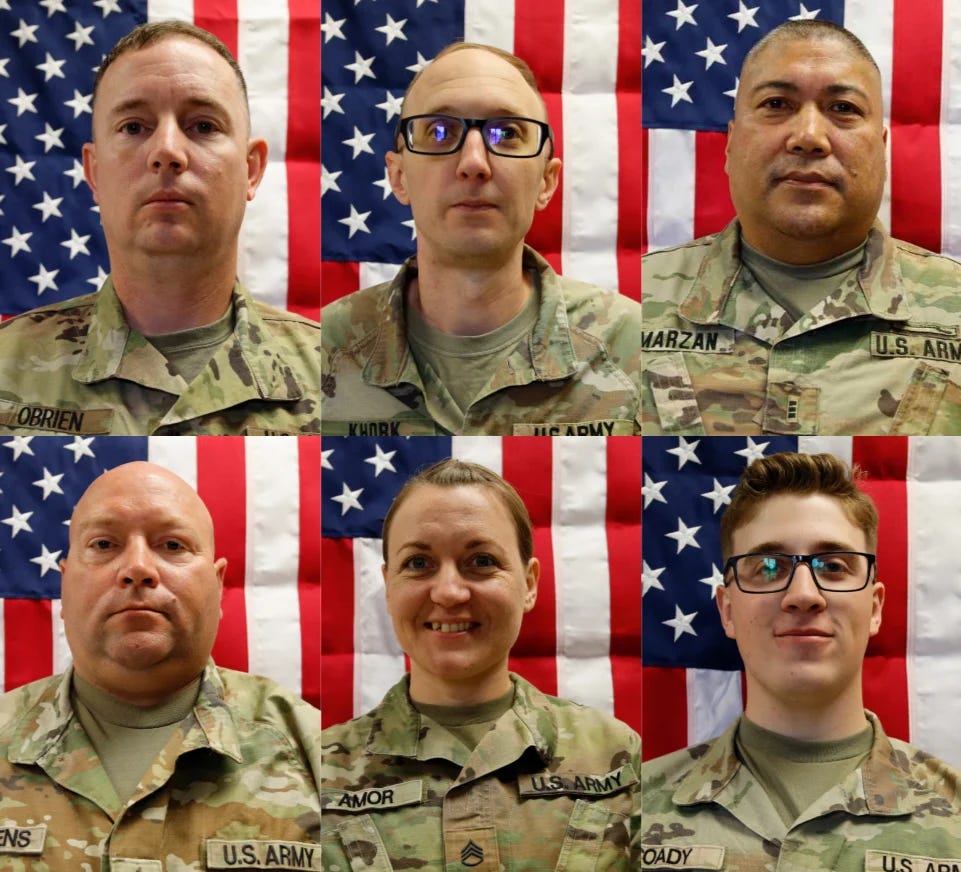
There is no excuse for that.
We have spent years watching what drones do in Ukraine. We have seen cheap drones destroy exposed vehicles, command posts, ammunition dumps, and troop positions. And somehow, American troops were still operating from an unhardened command center.
Nobody wakes up in the morning wanting to do a bad job. Nobody sent those soldiers there hoping they would get hit. And yes, a lot of American infrastructure in Kuwait, Iraq, Saudi Arabia, and elsewhere was built before the modern drone threat existed.
It may not be feasible to put every shelter underground. It may not be possible to harden every command post with overhead cover, T-walls, sandbags, and counter-drone systems.
We have had years to adapt. We chose not to move fast enough.
That has to change.
What Was ACE Doing?
The United States also appeared not to be using Agile Combat Employment effectively.
ACE is the doctrine of constantly moving aircraft from base to base so the enemy cannot easily target them. It is especially important in the Pacific, where the Air Force has been reopening and restoring old World War II-era airfields to serve as forward landing, rearming, and staging points.
The loss of an E-3 Sentry AWACS aircraft at Prince Sultan Air Base suggests we may not have been dispersing key assets aggressively enough.
Now, there are real constraints.
Using ACE in Saudi Arabia is not simple. You need landing rights. You need secure airfields. You need fuel, maintenance, parts, munitions, security, communications, and host-nation permission. Saudi Arabia may not have wanted U.S. aircraft flying combat missions from civilian airports. Germany-based operations would have increased flight time, fuel burn, and maintenance strain.
So maybe this was a risk calculation? Keep strategic aircraft at a base with the infrastructure to support them, even though the enemy knows where they are. Or disperse them and accept the logistical chaos.
Sometimes there is no good answer. But we took a risk, and we paid for it.
And if we cannot practice ACE in the Middle East, we are going to have a much harder time doing it under fire in the Pacific.
Our Allies Couldn’t Ally
Our allies didn’t exactly cover themselves in glory.
To be fair, I understand why the United States did not share exact plans, dates, and times before the operation. Operational security matters. Leaks kill people. But after the operation began, none of our allies meaningfully joined us, even though many were privately cheering us on.
Europe is strange this way. Many European leaders probably agreed that an Iranian regime collapse would make Europe safer. But European politicians are accountable to voters. And after a year of Washington threatening to withdraw from NATO, cutting weapons for Ukraine, and talking about annexing Greenland, it is not exactly shocking that European governments were reluctant to help.
How we treat allies matters. That is not sentimental. It is operational. And we have treated our allies like shit. When President Trump demanded that Europe help secure the Strait of Hormuz for maritime traffic, our allies refused.
But even if they had wanted to help, many of them probably could not have done much. Europe’s navies are too small. The United Kingdom had to scrape the bottom of the barrel just to get a destroyer to Crete for air defense after Iran launched a drone at a British air base there.
It was like asking your buddy to help you move and he says, “No, you were a jerk last time you came over.” Then you remember he doesn’t own a truck.
Europe’s navies could have helped. But not enough.
The lesson is not just that allies need to spend more on defense, though they do. The lesson is also that America needs to stop treating alliances like annoyances and then acting surprised when allies hesitate.
Some Americans Were Rooting for America to Lose
One of the uglier realities of the war was that a significant part of the American demographic was not rooting for Iran to win, exactly. But they were rooting for America to lose. That is different, but not much better.
President Trump is such a polarizing figure that some people were willing to deny him a victory even if that meant advancing Iran’s interests. In some cases, this was ideological. In other cases, it was monetization.
There is a market for American decline narratives. There is a market for “America had it coming.” There is a market for isolationism dressed up as sophistication. And because the United States does not throw people in jail for speech, there are few consequences for people who make money pushing narratives that work against American interests.
That freedom is a good thing. But the culture around it is sick.
A lot of Americans are comfortable flirting with communism, isolationism, or pro-Hamas rhetoric because they don’t believe they will ever have to live with the consequences. They know, deep down, that America will probably be okay.
So why not posture? Why not monetize decline? What is more American than making money?
The danger is that one day we may wake up and discover that the bill has come due.
I am old enough to remember the 1980s, when most Americans were on America’s side. Tip O’Neill did not go around laundering Soviet or Iranian propaganda because it was good content. We need to get back to a place where domestic political fights stop at the water’s edge.
Or at least somewhere near it.
We Rolled Snake Eyes on Hormuz
The Strait of Hormuz was never technically “closed.” But shipping didn’t continue normally.
Think of it this way: If you are an Uber driver and you get into an accident, your insurance might pay for a new car. But it will take time. You will miss work. You will lose income. The insurance company may replace the vehicle, but it will not necessarily make you whole.
So you avoid driving in bad weather. You avoid dangerous neighborhoods. You reduce risk.
Now imagine you own a $140 million oil tanker.
Even if there is only a 1% chance that your ship gets destroyed going through the Strait of Hormuz, you may decide not to go. Insurance might eventually pay for a new ship, but you lose revenue while the claim is processed, while the replacement is arranged, and while your asset is out of service.
So the strait did not need to be officially closed. Shipowners simply refused to move ships through it because the risk was too high.
People said President Trump did not have a plan for disruption in the Strait of Hormuz. That is partly true. CENTCOM had plans. They have been wargaming conflict with Iran for years.
But it looks like we gambled. We assumed the Iranian regime might collapse quickly and that the danger to shipping would subside after a few days.
We were wrong.
War is calculated risk. The Inchon Landing was a calculated risk. The Doolittle Raid was a calculated risk. D-Day was a calculated risk.
But this one did not work.
And the bigger problem is that we had no good Plan B. The United States had zero frigates available to escort convoys through the Strait of Hormuz. We can mock Europe for having small navies, but we did not have the escort capacity either.
That is a serious problem.
The Kurds Lost Our Number
The Kurds also decided to sit this one out. And honestly, can you blame them?
After Operation Desert Storm, we encouraged the Kurds to rise up against Saddam Hussein. Then we did not back them militarily, and Saddam crushed them. During the Iraq War, the Kurds were a major U.S. ally in the north. But we refused to support Kurdish independence. In 2019, we supported Kurdish forces against ISIS in Syria, then pulled back and allowed Turkey to attack Kurdish positions.
So when we apparently asked the Kurds to open a northern front against Iran, their response seems to have been: “We have seen this movie.”
Could 8,000 or 9,000 Kurdish fighters have made a difference? Maybe. They would have complicated Iran’s ground situation. If U.S. special forces had embedded with them the way they did with the Northern Alliance in Afghanistan, they might have created real pressure.
But the Kurds waited this one out. That is what happens when partners stop trusting you. Credibility is a military asset. And once spent, it is hard to get back.
We Failed to Define the End State
The biggest strategic problem may have been that we never clearly defined the end state. Rubio’s stated objectives were clear: destroy Iran’s air force, navy, missile launch capability, and missile manufacturing capability. But objectives are not the same thing as an end state.
If I go to get ice cream, my objective is to acquire ice cream. My end state is to be full of ice cream.
So what was the end state of Operation Epic Fury?
Was the goal regime collapse?
Was it a new government?
Was it a nuclear agreement?
Was it the permanent destruction of Iran’s nuclear weapons program?
Was it simply degrading Iran enough that it would accept a deal?
As of this writing, Iran still has enriched uranium. It is not clear whether it is willing to give that up. It is not even entirely clear who is in charge in Iran or who is empowered to negotiate.
A war can succeed tactically and still become strategically muddy if the political end state is vague.
We Won the Fight But Not the Narrative
The United States is very good at bombing people, but it isn’t very good at explaining why.
That is a recurring American problem. We win on the battlefield and then lose the narrative. We dominate the physical battlespace and then allow adversaries, grifters, foreign propagandists, and domestic cynics to define the meaning of the war.
Some people will hate America no matter what we do. That is unavoidable. But we can’t keep leaving the information space empty. A vacuum gets filled, and usually not by people who want America to succeed.
What We Need to Fix
The point of an AAR is not just to identify success and failure. It is to improve. So what should we do?
Restart the E-7 Wedgetail Program
First, we need to restart the E-7 Wedgetail AWACS program immediately — or at least buy an Air Force version of the E-2D Hawkeye.
The E-7 Wedgetail is basically a converted 737 with a radar mounted on top. It acts as the orchestra conductor of the battlespace. It is already used by the Royal Australian Air Force, the Republic of Korea Air Force, and the Turkish Air Force. The Royal Air Force has also been moving toward fielding it.
The E-3 Sentry is old. The last one rolled off the assembly line in 1992. The E-7 was supposed to replace it. Then the Pentagon canceled the program, citing survivability, cost, and a future satellite system that could supposedly do the same job.
But we don’t have that satellite system yet.
We have three options.
Do nothing and keep trying to fly aging E-3s.
Restart the E-7 Wedgetail program.
Or buy the E-2D Hawkeye, the Navy’s AWACS aircraft, which is still in production and can operate from shorter fields. The Hawkeye is less capable than the E-3, but we could use data links to pass information to ground stations where more people could help monitor the battlespace.
The only truly bad option is doing nothing.
Get Serious About Counter-Drone Warfare
Second, we need to adopt counter-drone technology and tactics much faster.
Ukraine has learned a lot about drone warfare because it had no choice. We should license Ukrainian drone interceptors and manufacture them in the United States.
We also need to study Ukrainian tactics, techniques, and procedures.
That does not mean copying everything Ukraine does. The United States fights differently. American air dominance changes the battlefield. Our logistics, firepower, and ISR are different.
But we still need to accept that small, cheap drones are now a persistent threat.
That means staying mobile, going underground, digging bunkers, hardening command posts, reducing the size of massive fixed headquarters.
It means not acting like it is still 2003.
Prepare the Homefront Information Battlespace
Third, we need to prepare the information battlefield at home.
America is not a dictatorship. We cannot tell people what to say. We cannot ban every bad take. We cannot imprison people for being wrong, obnoxious, or anti-American.
But we can learn from our enemies.
Hamas won much of the information war after October 7 because it produced more content than Israel. The content beast must be fed. If Hamas is releasing dramatic videos and the IDF is releasing nothing, creators are going to talk about the Hamas videos.
People get their news from social media now. That means the United States needs to flood the zone with truthful, compelling content. Not propaganda. Truthful content.
Show the sailors. Show the maintainers. Show the Marines. Show the pilots. Show the logistics. Show the work. Show the competence. Show the human beings behind the operation.
During Operation Iraqi Freedom, the United States had an embedded reporter program.
Today, we should create an embedded creator program.
Put creators on aircraft carriers. Put them on destroyers. Put them with bomber crews. Put them with maintainers. Put them with Marine Expeditionary Units. Put them with Army brigades and Air Force wings.
Yes, there are operational security concerns. That is a tactical problem. Solve it with procedures.
If you want public opinion to remain connected to the American warfighter, you have to reach people where they are.
And they are on their phones.
Build Containerized Merchant Defense
Fourth, we need to think seriously about containerized defensive systems for merchant ships.
During World War I and World War II, armed merchant cruisers were a thing. You could put guns on civilian ships and create vessels that could defend themselves or serve auxiliary roles.
Today, we can do something similar with standard 40-foot shipping containers.
China has already experimented with cargo ships carrying modular missile launchers. The United States has containerized systems for Tomahawk and SM-6 missiles and has tested them on littoral combat ships.
So why not build defensive containers? A container with Rolling Airframe Missiles for self-defense. A container with a Mk 38 machine gun system to fight unmanned surface vessels. A container full of drone interceptors.
Merchant ships already take armed guards aboard when transiting near Somalia. Is adding a containerized self-defense package and a small crew of contractors or military operators really so different?
Shipping companies may not love giving up cargo space. But in a crisis, containerized defense could turn leased commercial ships into auxiliary missile trucks, drone-defense platforms, or convoy-support vessels.
Given what happened around Hormuz, we should be exploring this now.
Use Command Solo
Fifth, where was Command Solo?
The EC-130J Command Solo, operated by the Pennsylvania Air National Guard, is designed to override TV, AM, and FM radio signals. Why were we not using it to disrupt Iranian regime broadcasts? Why were we not using it to transmit instructions to the Iranian people?
Maybe there is a good operational reason. Maybe the risk was too high. Maybe planners decided cyber and other psychological operations were enough. But from the outside, it is a question worth asking. If we have tools for information warfare, we should use them.
Rebuild Basic Military Literacy
Sixth, we need to improve the average American’s understanding of how the military works. During this conflict, there were widespread misconceptions about capabilities, war crimes, lawful orders, military objectives, and what modern operations actually look like.
This is partly because less than one half of one percent of Americans serve in the military anymore. The institutional knowledge just is not there. That makes it easier for influencers, pundits, and content creators to spread misinformation.
One solution is civic education. Require civics in middle school and high school. Expand Junior ROTC. Teach students what the military is, what it does, how civilian control works, what lawful orders are, and what America’s role in the world actually means.
A republic cannot make good decisions about war if its citizens do not understand the institution that fights it.
Create a Permanent Embedded Journalist and Influencer Program
Finally, we should create a permanent embedded journalist and influencer program. Journalists and creators could volunteer and be assigned to an Army brigade, Marine regiment, Air Force wing, Navy squadron, or ship. That unit becomes their unit.
During peacetime, they embed periodically — maybe a few days at a time, similar to a National Guard rhythm. When the unit deploys, they deploy with it. This is how you tell the story of the soldier, sailor, airman, Marine, and guardian.
Public affairs officers are important. But military public affairs content often comes from inside a rigid institutional box. It can feel sanitized, slow, and lifeless. Good journalists and creators tell stories differently.
If America wants to win the narrative, it needs to stop relying only on press releases and start building relationships with the people who actually shape public attention.
The Bottom Line
Operation Epic Fury was a military success.
The United States destroyed key Iranian capabilities, defended against ballistic missiles, hunted leadership targets, rescued downed aircrew, validated cheap weapons systems, dominated cyber, and sent a clear warning to China, Russia, and every regime that thinks America is too distracted or divided to act.
But it also exposed serious problems.
Our bases are too vulnerable to drones.
Our command posts are too exposed.
Our strategic aircraft are aging.
Our allies are politically hesitant and militarily under-resourced.
Our Navy lacks enough escort capacity.
Our partners remember when we abandon them.
Our information strategy is still too slow.
Our end states are still too vague.
And too many Americans are comfortable treating American failure as content.
That is the lesson. America can still win the fight. But winning the fight is not enough.
The next war will not just be decided by stealth aircraft, missile defense, cyber access, and precision strikes. It will also be decided by hardened infrastructure, cheap mass-produced weapons, allied credibility, merchant shipping resilience, public understanding, narrative dominance, and political clarity.
We showed the world what American power can do. Now we need to show that America can learn.