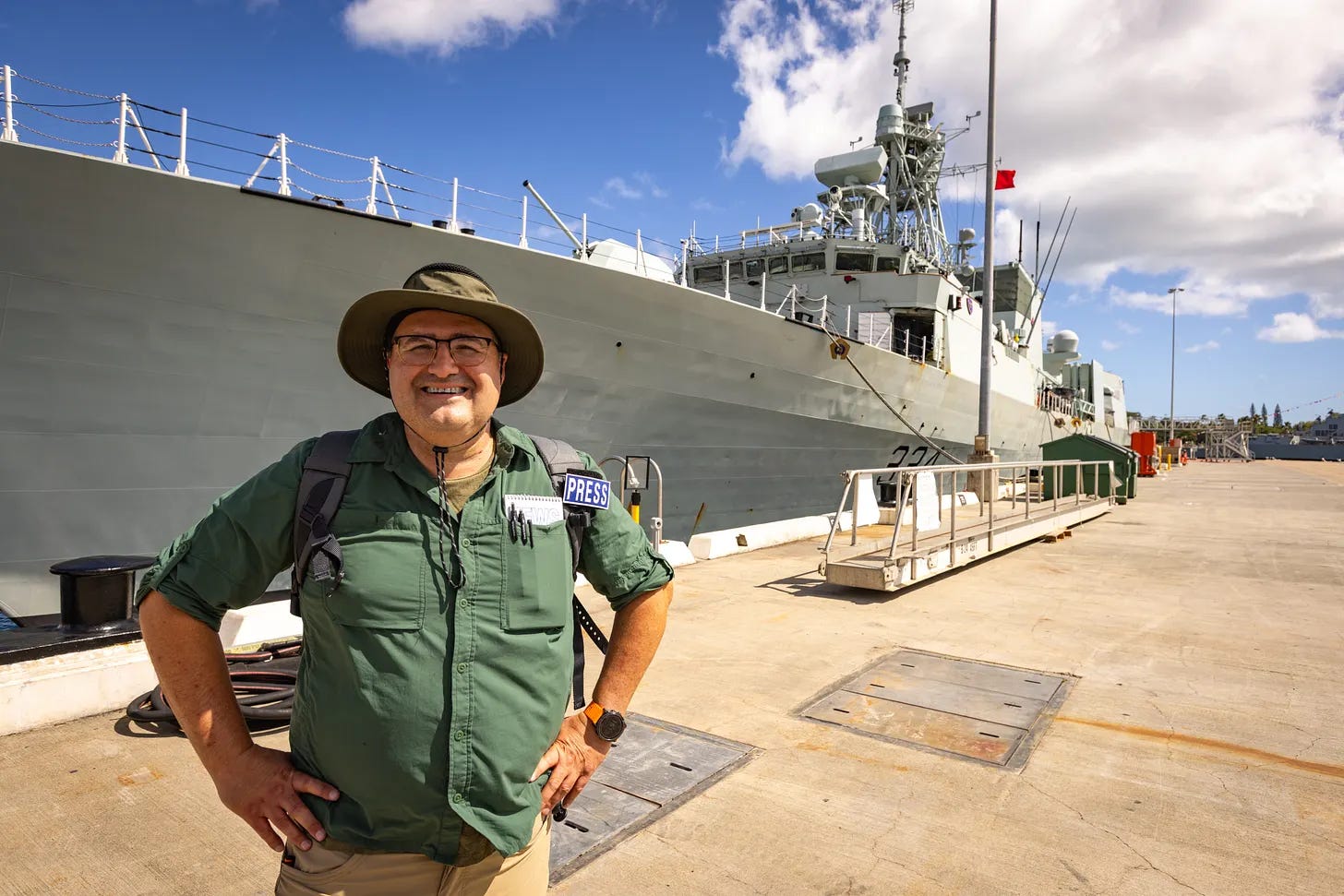
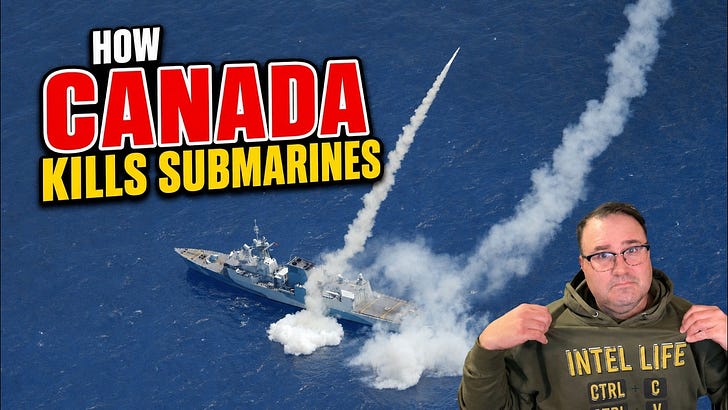
A submarine can hide beneath millions of square miles of ocean. HMCS Regina was built to find it.
This video was shot on location and cost me $20,000 to produce and animate. Please consider supporting the channel by becoming a member for only $5.
First off, thank you to my Paid Substack subscribers. It’s because of you that I was able to fly my producer and me to Hawaii for RIMPAC and buy the $4,000 computer needed to 3D animate the video.
Not a subscriber? Join here for only $5.
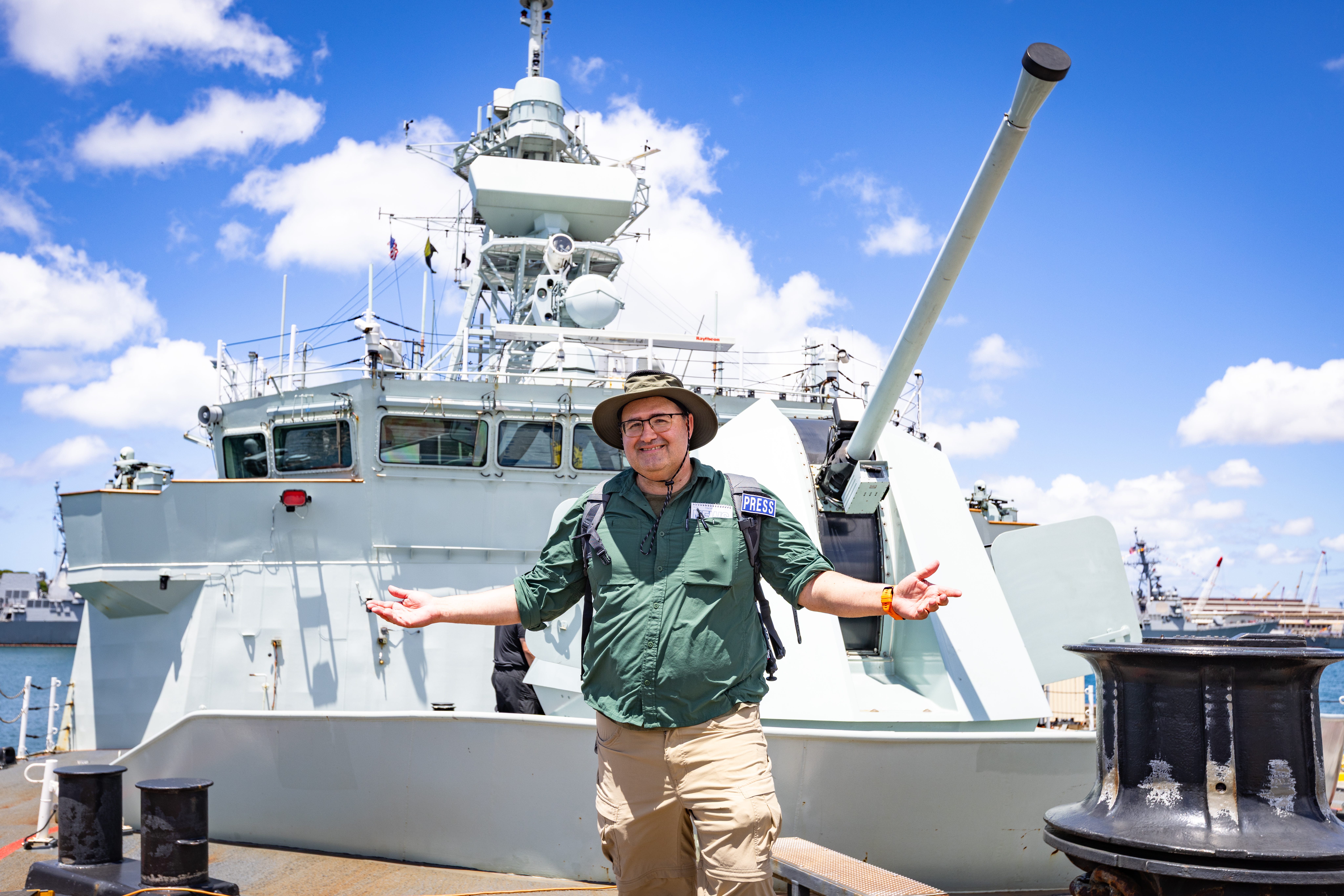
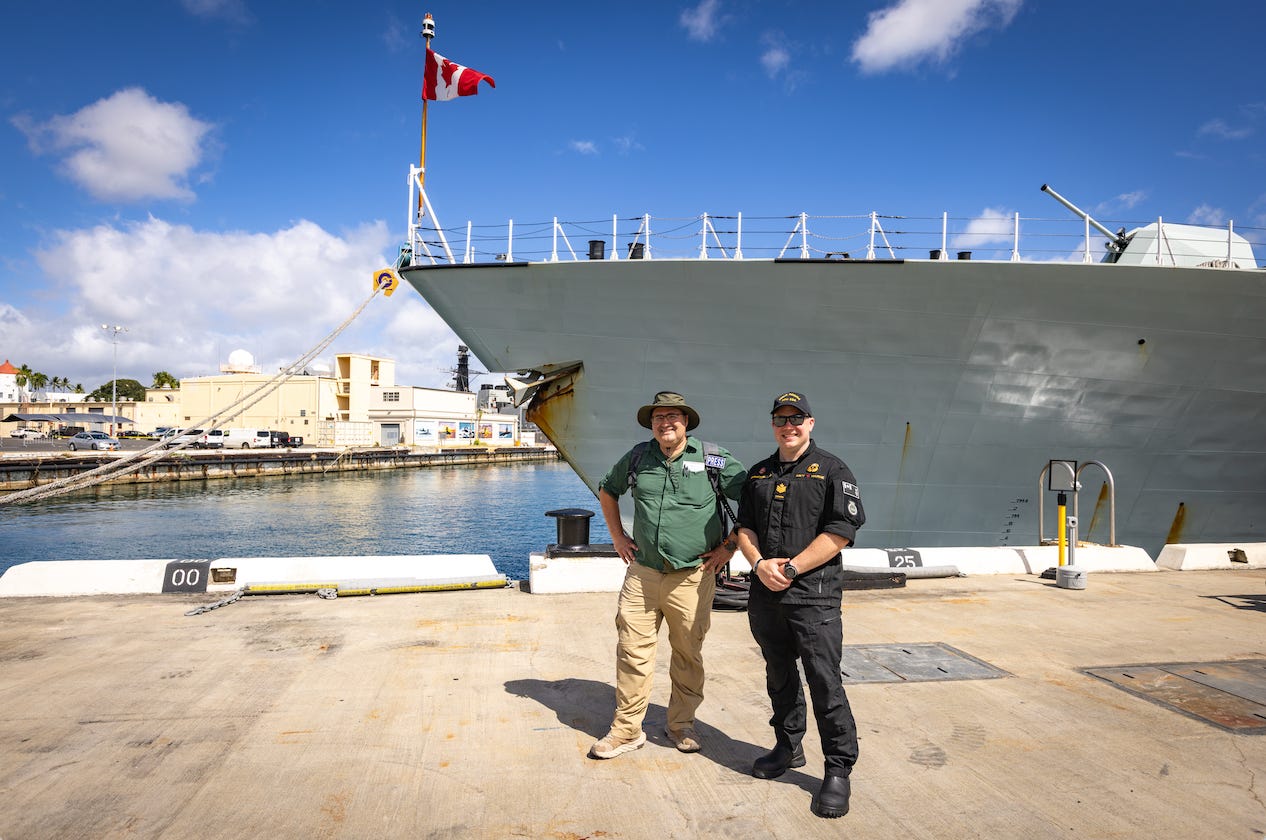
I went aboard the Royal Canadian Navy’s Halifax-class frigate HMCS Regina during RIMPAC, the world’s largest international maritime exercise, to learn how this ship hunts submarines, defends itself from missiles, launches helicopters in rough seas, and survives when something goes catastrophically wrong.
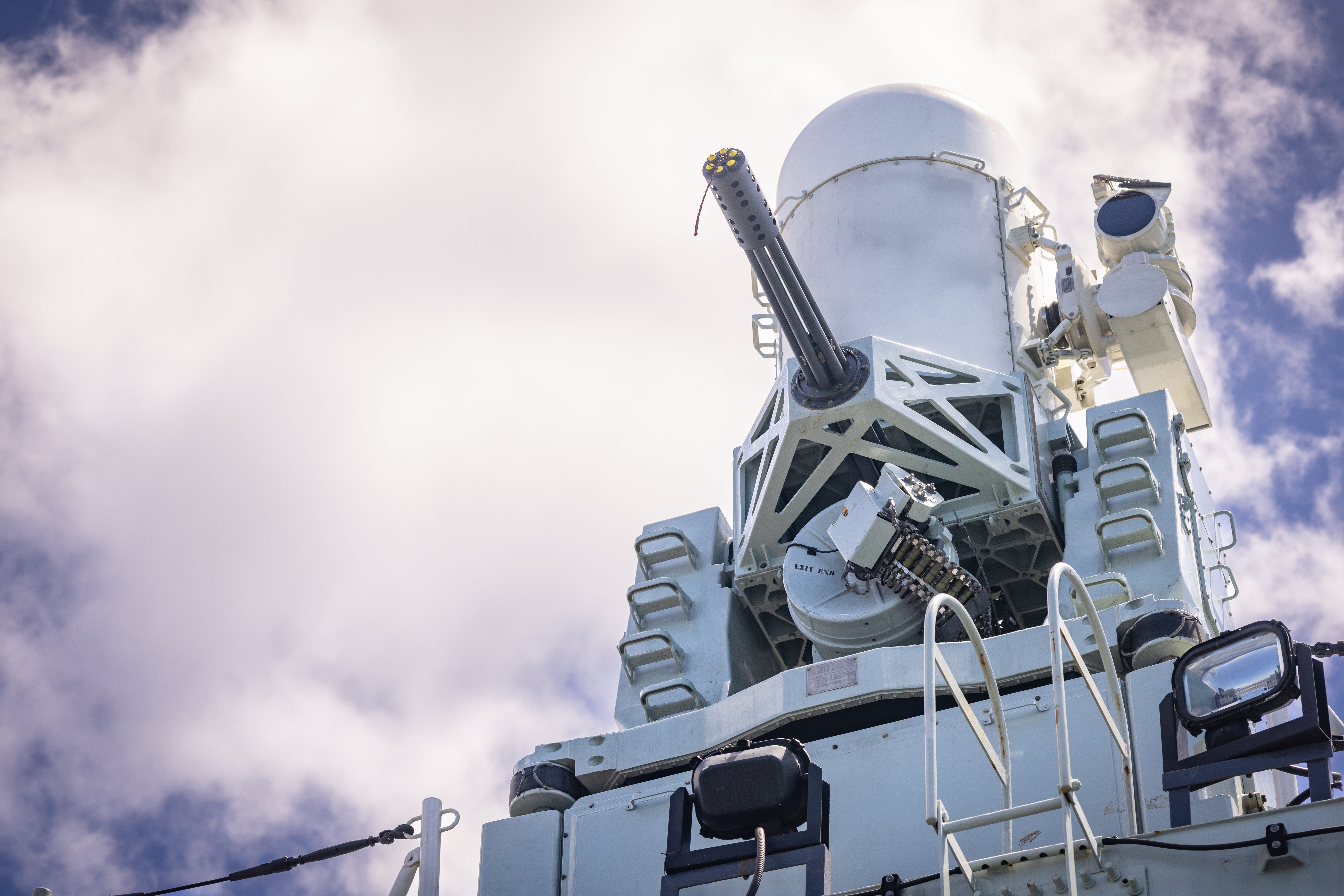
We’ll examine the CH-148 Cyclone helicopter, CANTASS towed-array sonar, SMART-S radar, Harpoon and Evolved Sea Sparrow missiles, the 57mm Bofors gun, MASS decoy launchers, torpedo systems, damage control—and Canada’s wonderfully named Beartrap helicopter-handling system.
But Regina isn’t merely a collection of weapons. It is a floating power plant, airfield, sensor network, command center, fire department, hospital, and home for roughly 225 Canadian sailors.
Welcome aboard HMCS Regina.
Special thanks to the Captain and crew of the HMCS Regina for being so awesome during filming.